
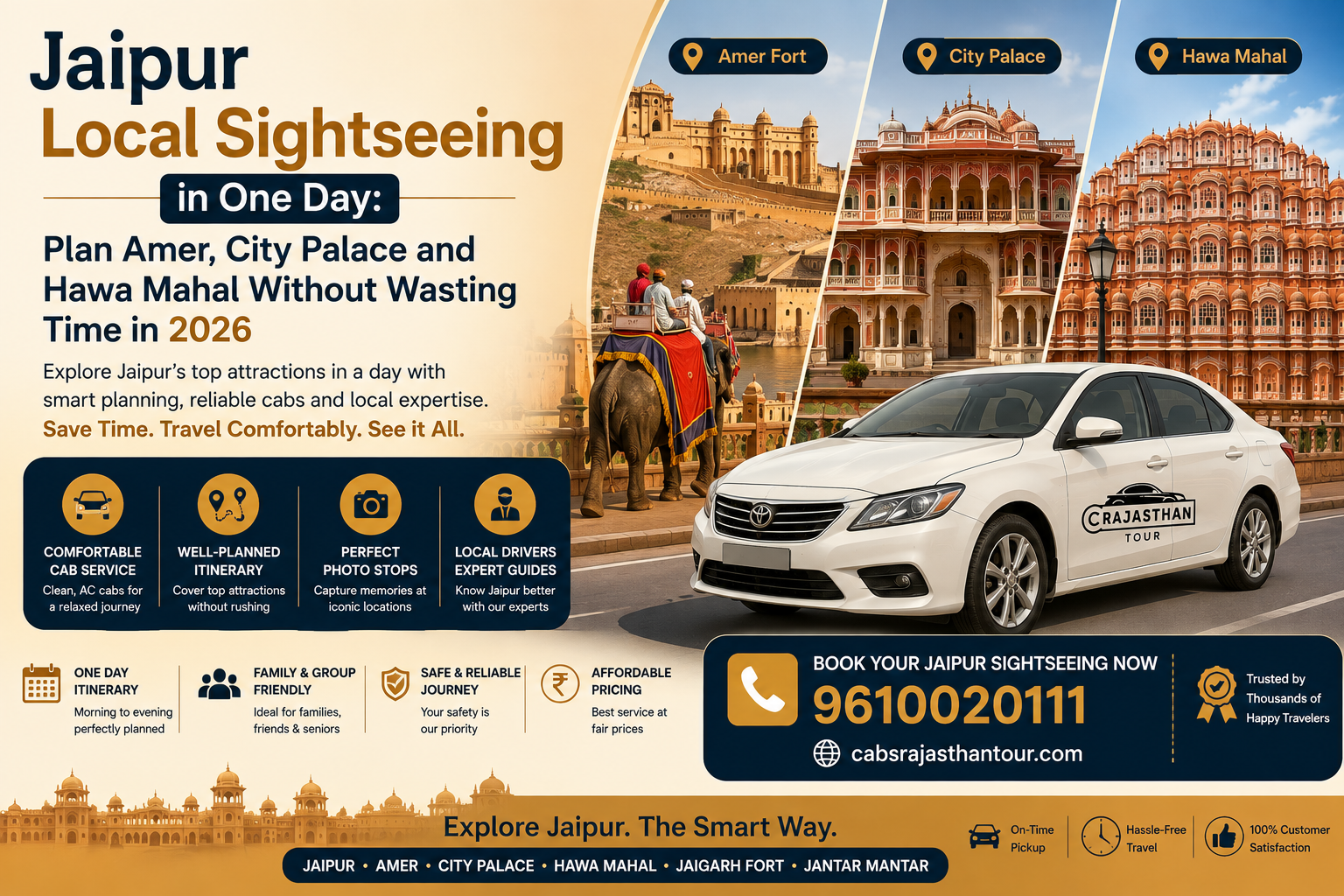
A couple from Pune landed in Jaipur at 8 in the morning last October. They had one full day. Nine places on their list. By 4 in the afternoon they had seen three.
Nothing dramatic went wrong. They just went in the wrong order. They started at Hawa Mahal, drove to Amer, came back to the old city for City Palace, then crossed town again for Nahargarh. Every crossing cost them forty minutes in traffic.
That is the real problem with Jaipur local sightseeing. The city is not hard. The sequence is. Get the order right and one day is enough for the big five. Get it wrong and you spend the day inside a car.
This post gives you the order that works in 2026, the timings to plan around, how many cab hours you actually need, and the small mistakes that quietly eat your day.
Why Most One Day Jaipur Plans Fall Apart
Jaipur sits in a shape that punishes zigzagging. Amer Fort is about 11 kilometres north of the old city. Nahargarh and Jaigarh sit on the hills above. City Palace, Jantar Mantar and Hawa Mahal are packed together inside the walled Pink City. Albert Hall and the garden around it lie just outside.
Most travellers plan by popularity. Hawa Mahal first because everyone has seen the photo. Then wherever the search results point next. The map never enters the conversation.
There is a second problem. Jaipur traffic is not evenly bad. Between 10 in the morning and 1 in the afternoon, the roads around the old city gates slow to a crawl. Between 5 and 7 in the evening, the Amer road backs up as day visitors head home. A plan that ignores these windows loses hours it never planned to lose.
The Order That Actually Works
Start far, finish near. That is the whole idea.
Begin with Amer Fort right at opening time, usually around 8 in the morning. The road is clear, the light is soft, and the courtyards are quiet. By 11 you have seen the fort without fighting for photo space at every arch.
On the way back, stop for a few minutes at Jal Mahal. It is a photo stop, not a visit. You cannot enter the palace, so ten minutes on the promenade is plenty.
Then move into the Pink City. City Palace and Jantar Mantar sit side by side, so they take one stretch of time. Hawa Mahal is a short walk or a very short ride from there. Finish the old city loop with a late lunch and a little bazaar wandering.
The evening slot goes to either Nahargarh for sunset or Albert Hall lit up after dark. Both are lighter on walking than the morning.
Morning Block: Amer Fort Without the Crowd
Aim to reach the parking area before the ticket line builds up. By 9:30 in peak season, the queue at the main gate can run long, and tour groups start arriving in waves.
Inside, most visitors follow the same path: the main courtyard, Ganesh Pol, Sheesh Mahal, the Sukh Niwas area. Give this about two hours. If you rush it in 60 minutes, you will remember only the mirror hall.
Getting up to the fort is a choice. You can walk up the ramp, take a jeep ride, or arrive by car up to the designated point. Walking is fine in winter mornings. In April and May, skip it. The stone gets hot early and the climb is steeper than it looks in photos.
Small tip that saves a lot of confusion: agree with your driver on a fixed meeting point before you enter. The exit gate and the parking lot are not always close, and phone networks get patchy inside the thick walls.
Midday Block: City Palace, Jantar Mantar and Hawa Mahal
City Palace is still home to the royal family, and part of it stays closed to visitors. The open sections include courtyards, museums with textiles and weapons, and the Chandra Mahal viewing areas. Plan 90 minutes to two hours.
Jantar Mantar is next door. The stone instruments look like modern sculpture, and the site is a UNESCO World Heritage listing. A local expert helps here more than almost anywhere else in Jaipur. Without one, the giant sundial is just a big stone triangle. With one, you can actually read the time from it. Thirty to 45 minutes is enough.
Hawa Mahal is best seen from the street opposite, or from one of the cafes facing it. Many visitors spend an hour going inside only to find the best view is from outside. The interior is a walk through narrow windowed corridors. Interesting, but short. Give the inside 20 to 30 minutes if you want it.
Lunch fits between City Palace and Hawa Mahal. Old city lanes are packed with small restaurants. Choose a place with a clean kitchen and steady local crowd, not the one with the tout at the door.
Evening Block: Nahargarh or Albert Hall
Nahargarh Fort looks over the whole city and is popular for sunset. It is also popular for everyone else, so arrive by 4:30 in the afternoon if you want a decent spot. The drive up takes around 30 to 40 minutes from the old city in normal traffic.
If you would rather skip the hill, Albert Hall Museum and the garden around it work well as a softer evening. The building is lit after dark and looks better at night than most places do in daylight.
Both together in one evening is too much. Pick one. Honestly, most people who try both end up rushing the sunset and missing the lights.
Timings to Plan Around in 2026
Most major sites in Jaipur open between 8 and 9:30 in the morning and close between 4:30 and 5:30 in the evening. Opening hours can shift with the season or during festivals, so a quick check with the official listing or your driver the day before saves a wasted trip.
Temples inside the old city close for a midday break. If a temple stop matters to you, plan it early or late. Do not assume it is open at 1 in the afternoon.
Composite tickets exist for several state-run monuments and can save money if you visit more than a couple of them. Prices and validity rules get revised from time to time, so confirm the current details at the counter or on the official site before you buy.
Sundays and public holidays bring local families to the same places. If your dates are flexible, a weekday makes every queue shorter.
How Many Hours of Cab Do You Need
A full day of sightseeing usually runs on an 8 hour, 80 kilometre package in most Indian cities. Jaipur is no different. The loop above, Amer to Jal Mahal to the old city to Nahargarh and back to your hotel, comes close to that limit on distance and sits comfortably inside it on time.
If you add Jaigarh Fort next to Nahargarh, or a stop at Galtaji, you may cross the 80 kilometre mark. Extra kilometres and extra hours are billed separately on most packages, so ask upfront what the overage rate is.
A dedicated Jaipur city tour taxi for the day makes the plan much easier to follow. The driver knows where the parking lots are, which gate to use, and when a road will jam. You are not hunting for a ride at each stop, and your bags stay in the car while you walk.
What It Costs in 2026
Prices depend on the vehicle type, season and package hours. A standard AC sedan on an 8 hour local package generally sits in the range of a couple of thousand rupees. SUVs and larger vehicles cost more. Peak winter weeks, when Jaipur is busiest, usually price higher than the quiet summer months.
Entry tickets, local expert fees, jeep rides at Amer, and parking are usually not part of the cab package. Budget for them separately. A rough add-on of a few hundred rupees per person for entries is normal, more if you hire a local expert.
Ask for the package terms in writing or on WhatsApp before you confirm. Included hours, included kilometres, waiting time, night charges. Four lines. It takes two minutes and prevents almost every argument at the end of the day.
Mistakes That Quietly Eat Your Day
Starting at 10 instead of 8. Two hours of morning is worth more than three hours of afternoon in Jaipur, because the roads and the light are both better early.
Booking too many stops. Nine places is a list, not a plan. Five well chosen stops give you time to actually look at them. Some people swear by seeing everything. Others feel exhausted by lunch. Be honest about which one you are.
Not eating early. The old city has fewer good lunch options after 2:30, and a hungry group makes bad decisions.
Shopping stops that were never on the list. Some drivers and escorts steer visitors toward emporiums where they earn a commission. A polite “not today” is enough. A trustworthy driver will not push.
Skipping water and sun cover. From March to June, Jaipur afternoons are hot enough to make a short walk feel long. Carry water, a hat, and closed footwear.
Summer, Monsoon and Winter: What Changes
October to March is the comfortable season. Mornings are cool, the crowds are the largest, and hotel and cab prices are at their highest. Book earlier during Diwali week and the New Year stretch.
April to June is hot. Keep the outdoor stops in the first half of the day and move museums and shaded areas to the afternoon. Nahargarh at sunset is still pleasant once the heat drops.
July to September brings the monsoon. Jaipur stays workable, and the hills around Amer turn green, which many photographers prefer. Carry a light rain layer. Some open-air areas get slippery.
A Real Day That Went Right
A family of five from Bengaluru, two adults, two teenagers and a grandmother, followed this exact order in January. The cab picked them up at 7:45. They reached Amer at 8:10, before the ticket line formed. Jal Mahal photo stop at 11. Lunch in the old city at 12:30. City Palace and Jantar Mantar in the early afternoon. Hawa Mahal from the cafe opposite, with chai, at 4.
The grandmother sat at that cafe while the rest of the family walked through the bazaar. Nobody rushed. They were back at the hotel by 6, tired but happy.
The day worked because someone had planned the map first and the wish list second. That is the whole trick.
Arriving by Air and Starting the Same Day
Many visitors land in the morning and want to begin sightseeing straight away. It is possible, but only if arrival logistics are already settled. A confirmed Jaipur airport cab waiting at arrivals means you can drop bags at the hotel and start by 10 instead of losing an hour to negotiations at the kerb.
If your flight lands after noon, do not force a full day. Take an easy evening at Albert Hall or the old city bazaars and start the real plan the next morning.
When One Day Is Not Enough
Some travellers love forts, museums and slow walking. For them, one day is a taste, not a visit. Two days lets you add Jaigarh, Galtaji, the Panna Meena ka Kund stepwell and a proper craft or block printing session.
If you want the city explained in an organised way, with a set route and timing, a structured best city tour in Rajasthan can take the planning off your hands. Some travellers prefer that over building the day themselves, especially on a first visit.
And if Jaipur is only the first stop, a Jaipur Agra 2 days tour is a common next step. Many people do the Jaipur day first, then head to the Taj Mahal the following morning.
Quick Checklist Before You Leave the Hotel
- Start by 8 in the morning, not 10.
- Go far first, near later: Amer, then the old city, then Nahargarh or Albert Hall.
- Fix a meeting point with the driver at each stop.
- Carry water, cash for small tickets, and a light cover for your head.
- Confirm package hours, kilometres and overage rates before you sit in the car.
- Choose five stops, not nine.
A Backup Plan for Heat or Rain
Plans change. A sudden shower in July or a 44 degree afternoon in May can flatten the best schedule. Keep a simple backup in your pocket.
On very hot days, swap the order. Do Amer Fort at opening, finish the old city by 1 pm, then rest at the hotel and return for Albert Hall in the evening. City Palace and its museums have shaded rooms and cool halls, so they work well as the midday stop.
On rainy days, keep the museums and covered markets for the wet hours. Stone steps at forts get slippery, so wear shoes with grip and go slowly. Jal Mahal photographs beautifully after rain, with the hills nearby looking green.
Tell your driver about the backup the night before. A good driver will adjust the route without fuss, and will know which road is flooded or jammed before you do.
Frequently Asked Questions
Can I see Jaipur in one day?
Yes, the main highlights fit in one day if you plan the route properly. Amer Fort, City Palace, Jantar Mantar and Hawa Mahal work well together, with Nahargarh or Albert Hall as an evening stop. Start early and avoid zigzagging across the city.
What is the best order for Jaipur local sightseeing?
Begin with Amer Fort in the morning, stop briefly at Jal Mahal, then cover City Palace, Jantar Mantar and Hawa Mahal in the old city. End with Nahargarh Fort at sunset or Albert Hall in the evening. This keeps backtracking to a minimum.
How many hours of cab do I need for Jaipur sightseeing?
Most travellers use an 8 hour, 80 kilometre package, which covers the main loop. Adding extra stops such as Jaigarh or Galtaji may need extra hours or kilometres, so confirm the overage rate before starting.
What is the best time to start Jaipur sightseeing?
Around 8 in the morning. Roads are quieter, Amer Fort has fewer visitors, and the heat is manageable, especially from March to June.
Are entry tickets included in the cab fare?
Usually not. Monument tickets, local expert fees, jeep rides and parking are normally paid separately, so confirm what the cab package covers before you book.
Do I need a local expert in Jaipur?
Not required, but useful at Jantar Mantar and Amer Fort, where the history and instruments make more sense with explanation. Agree the fee before the tour begins.
Final Word
Jaipur rewards planning more than stamina. Fix the order, start early, and give each place the time it needs. The rest is chai and photographs.
Want the day mapped to your hotel location and pace? Reach out through the Jaipur cab contact number and we will suggest a route and timing based on your dates and group.